Genetics | Prenatal Genetics

Molecular Karyotype / Array-CGH

Genetics | Prenatal Genetics

Molecular Karyotype / Array-CGH

Genetics | Prenatal Genetics

Molecular Karyotype / Array-CGH

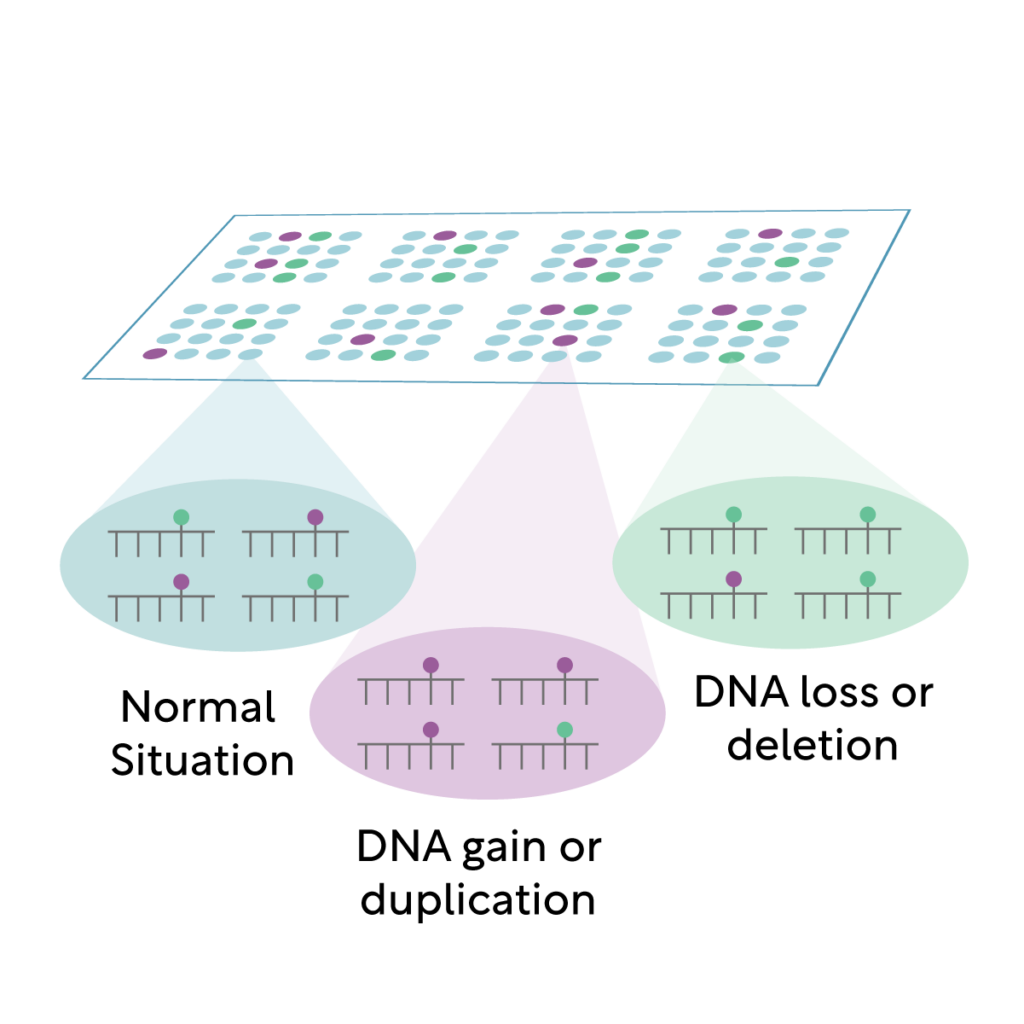
Array-based Comparative Genomic Hybridisation (Array-CGH) is a technique developed to detect chromosomal abnormalities, such as numerical anomalies (aneuploidies) affecting the 22 autosomes (chromosomes 1 to 22) and the sex chromosomes (X and Y), as well as copy number variations (CNVs) — that is, small chromosomal imbalances such as duplications/amplifications (extra copies of DNA segments) and deletions (losses of genome portions).

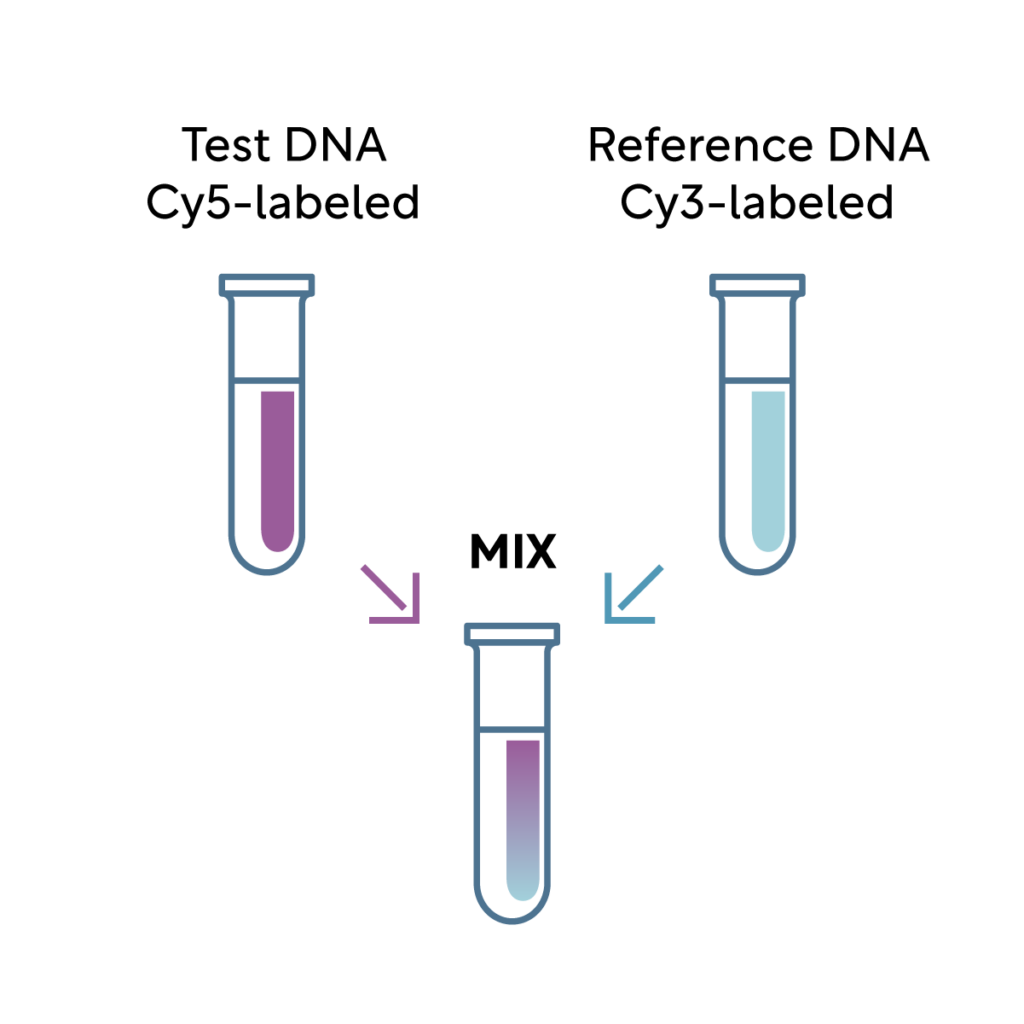
The principle behind Array-CGH is a quantitative comparison between the DNA being tested (extracted from foetal cells in the case of prenatal diagnosis, or from the patient’s blood sample depending on whether the diagnosis is prenatal or postnatal) and reference genomic DNA from a healthy individual (known as the reference DNA).

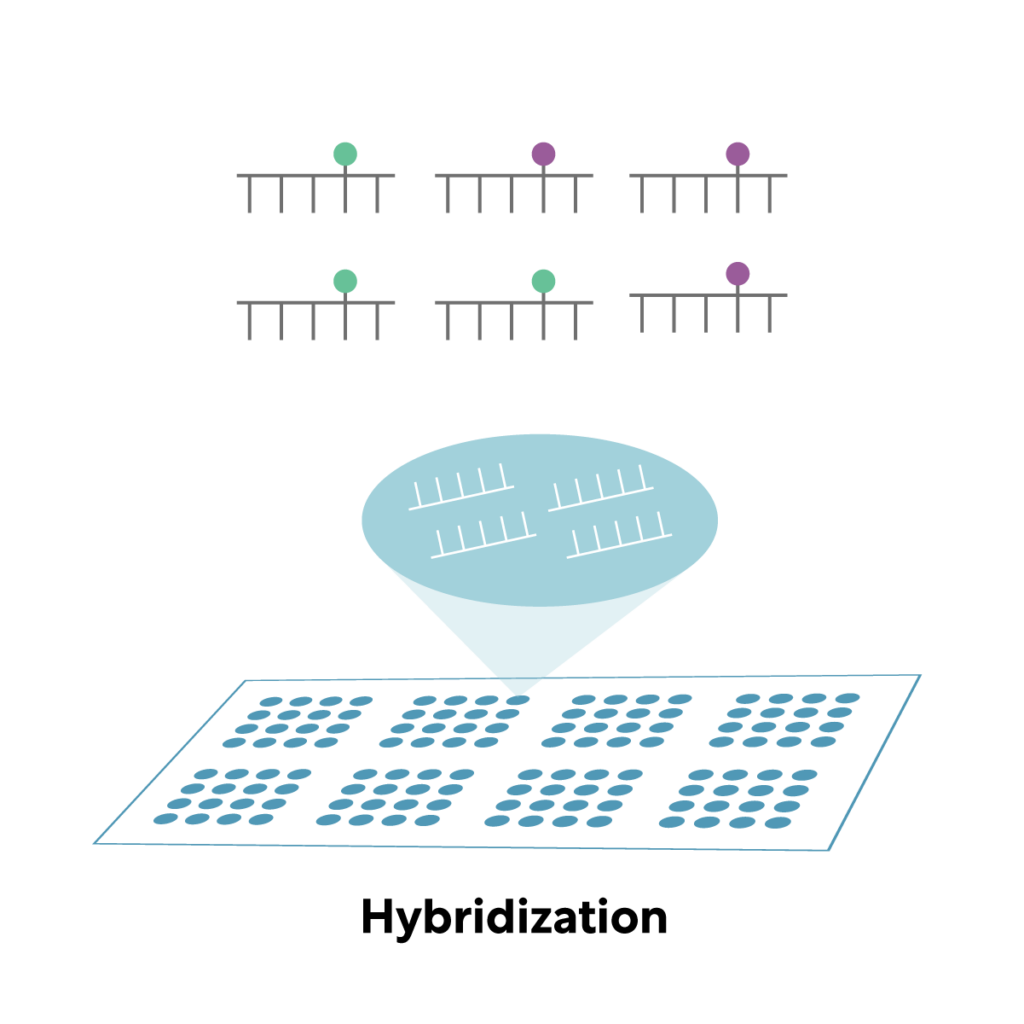
During the analysis, both DNA samples are labelled with fluorescent molecules — typically a red fluorochrome for the test DNA and a green one for the reference DNA. The two samples are then combined in equal parts and incubated (hybridisation) onto a microarray — a glass slide coated with known DNA fragments (called probes). Each probe represents a specific region of the human genome, together covering the entire chromosomal set. The higher the number of clones included, the greater the array’s sensitivity in identifying copy number variations in small chromosomal regions.

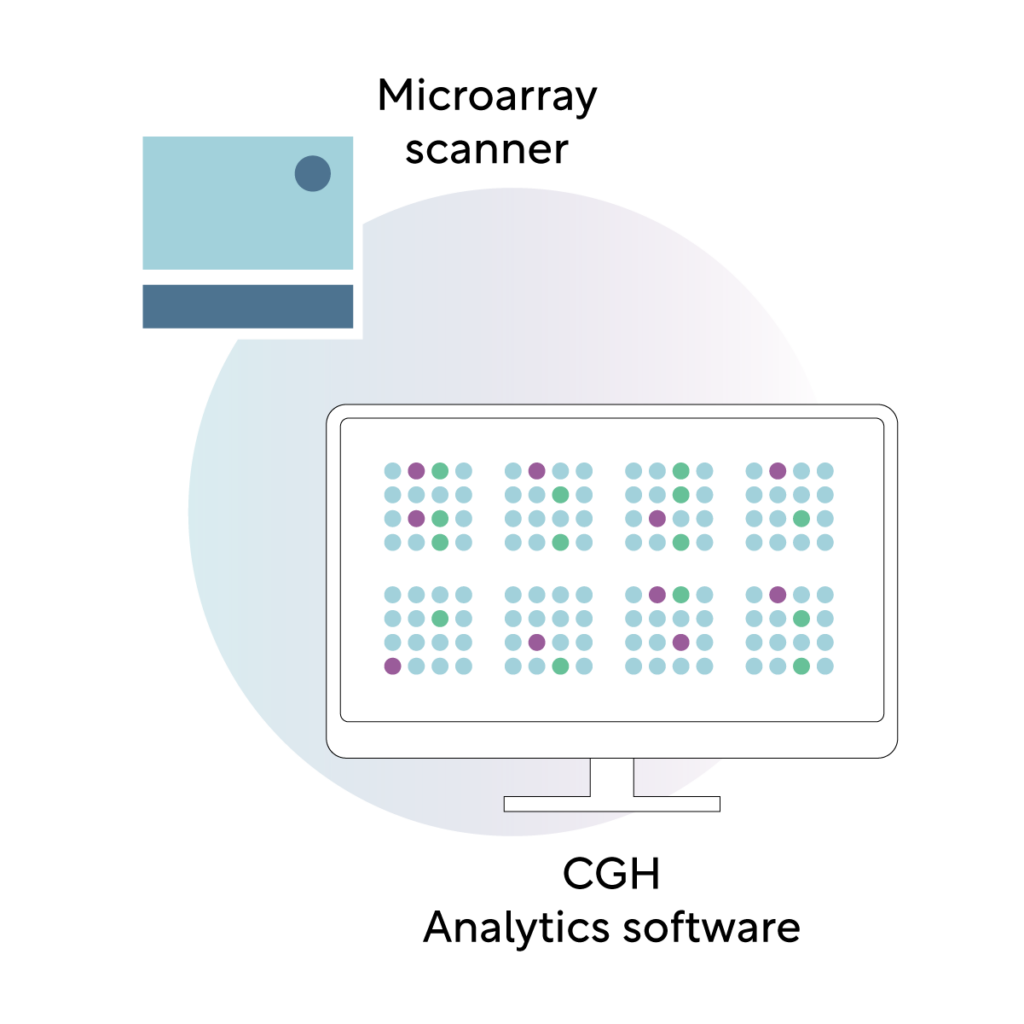
Array-CGH detects genomic alterations that may cause conditions such as intellectual disability, autism, epilepsy, and congenital malformations. This technique makes it possible to analyse all chromosomes simultaneously and in greater detail than standard karyotyping.

In fact, traditional cytogenetic analysis is limited by its resolution power and typically cannot detect chromosomal alterations smaller than about 10 Mb. However, DNA alterations below the detection threshold of standard karyotyping may be the cause of various genetic disorders.

The introduction of Array-CGH, also known as molecular karyotyping, makes it possible to identify such anomalies, significantly improving the chances of correctly diagnosing genetic disorders.

Array-CGH is performed alongside an invasive prenatal procedure such as chorionic villus sampling or amniocentesis, by extracting foetal DNA from the collected tissue.

Postnatal molecular karyotyping is indicated in the following cases:

  • Suspected chromosomal syndromes
  • Congenital malformations
  • Neurological disorders
  • Autism
  • Epilepsy
  • Cognitive or psychomotor developmental disorders
  • Diagnostic investigation of chromosomal anomalies previously identified via conventional karyotyping
  • Complex phenotypes
  • Family members of individuals with chromosomal abnormalities.


The test is performed at the Pavia operational site, which implements a quality management system in accordance with ISO 9001:2015 and SIGUCert standards