Pathological Anatomy
Histology is the study of the morphology of tissues and the cells that compose them, both from a structural and functional perspective. The essential tool in histology is the light microscope, which allows direct observation of the tissues under investigation. For such observation to be possible, however, the tissues must first undergo a series of preparation steps: they must be sliced into extremely thin sections to allow light to pass through, stained in various ways to make different components more recognisable and distinguishable, and treated to prevent decomposition and allow preservation for future analysis.
A tissue sample processed in this way is referred to as a histological specimen.
Histology plays an important role in medicine, particularly in pathological anatomy and the study of disease processes. It is essential in both preoperative and postoperative analysis in medical and surgical settings.
To be examined under a microscope, tissues must go through several processing steps:
1. FIXATION – The purpose of fixation is to preserve the cellular structure and prevent the alterations caused by cell death. For this reason, biopsy samples are immediately placed in a fixative solution — the most common being formalin — which rapidly halts cellular decomposition processes;
2. GROSS SAMPLING – Once the biopsy sample reaches the laboratory, the pathologist selects the most significant areas, based on their macroscopic appearance, that are considered suitable for microscopic examination;
3. PROCESSING – The samples are then dehydrated using organic solvents (such as ethanol) and treated with other agents (e.g. xylene) to allow subsequent infiltration with paraffin wax. The wax solidifies within the tissue, enabling it to be cut into thin sections. This step is carried out using an automated device called a tissue processor;
4. EMBEDDING – The treated samples are then embedded in plastic cassettes (called biocassettes), each labelled with the specimen’s identification number. This creates paraffin blocks that contain the tissue to be examined;
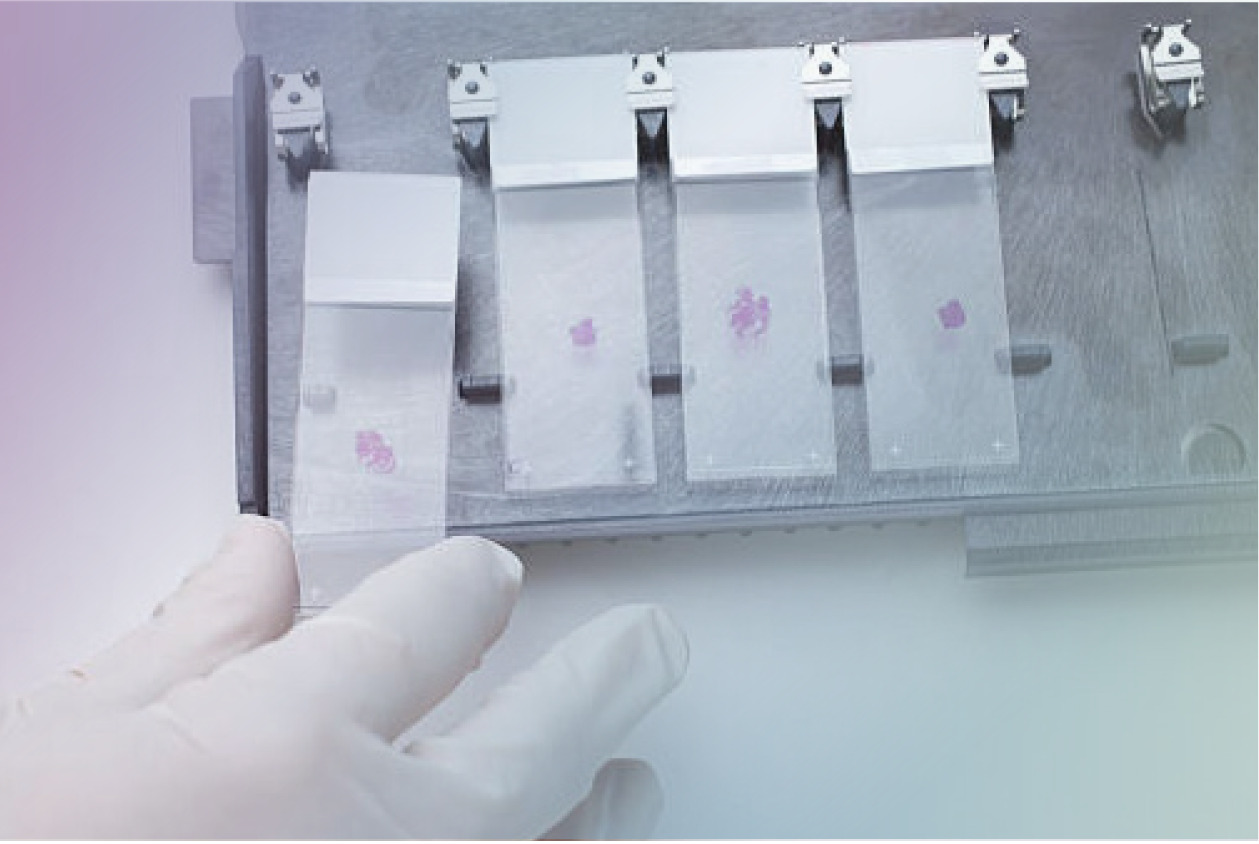
5. SECTIONING – The paraffin blocks are then cut using a microtome into sections 2-4 micrometres thick. These sections are mounted onto clear microscope slides, which are also labelled with the specimen’s identification number;
6. STAINING – The tissue sections are stained using dyes that help distinguish between the nucleus and cytoplasm. If further diagnostic clarification is needed, additional sections can be cut from the same paraffin blocks and subjected to histochemical or immunohistochemical staining techniques.
At this stage, the biopsy sample is ready for microscopic analysis and subsequent histopathological diagnosis.
Thanks to the extensive experience and professionalism of our histopathologists (meet our team here), our laboratory prepares and analyses a wide variety of biopsy samples, from routine to complex, surgical and non-surgical.
You can explore here all the histological tests available at our laboratory. Call us if you have any questions or concerns.